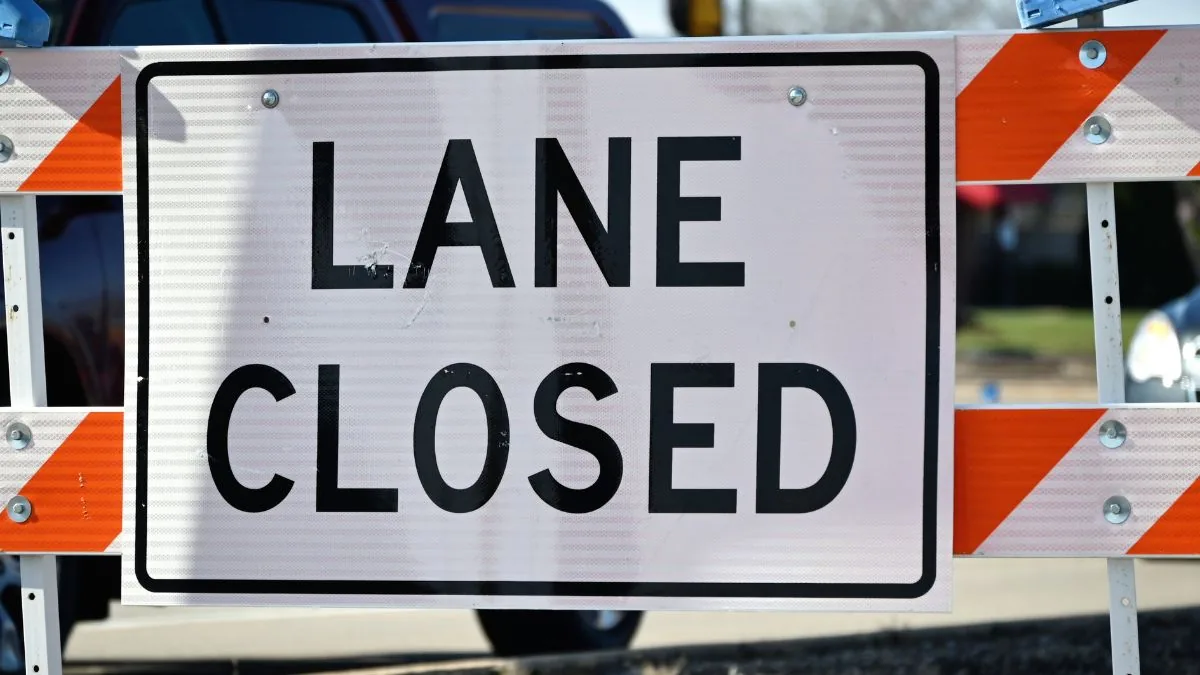
Traffic control for a lane closure in Vancouver requires a complete Traffic Management Plan (TMP) with warning signs, Type B arrow boards on multi-lane arterial streets, certified Traffic Control Persons (TCPs), Cones and pylons with retro-reflectORIZED sleeves, and proper lane shifts to protect workers and guide motorists safely through the work zone. All temporary signage and traffic equipment must be ordered in conjunction with Lane Closure Technicians (LCTs), and safety signs must be fully installed before any flagging operations begin. Safeside Traffic Control Ltd delivers this comprehensive traffic control for safe, compliant lane closures across Vancouver and Metro Vancouver.
Required Traffic Control Components
A lane closure in Vancouver requires multiple coordinated elements to ensure safety and compliance. The key components include:
- Advance warning signs are placed well upstream to alert drivers of the upcoming lane closure.
- Type B arrow boards are mandatory on any lane closure on a multi-lane arterial classified street in Vancouver.
- Certified Traffic Control Persons (TCPs) to direct traffic and manage flow through the work zone.
- Lane Closure Technicians (LCTs) who devise, implement, and manage traffic services for work areas and road closures.
- Cones and pylons with yellow retro-reflectORIZED sleeves along the centerline and white retro-reflectORIZED sleeves along the outside shoulder or curb.
- Temporary signage clearly indicating where motorists and pedestrians must proceed.
- Crash trucks (MASH-certified) are deployed for high-speed closures to protect workers.
All required construction and traffic signs must be in place before starting flagging operations.
Personnel Requirements
Vancouver lane closures require trained, certified personnel to manage traffic safely. TCPs with over 700 hours of road experience are eligible to become LCTs, but they must complete additional training first:
LCT Training Requirements
- Complete the internal LCT course and pass the final exam.
- Complete driver road safety course and ride-along practicum.
- Complete on-road LCT mentorship.
LCTs allow clients to focus on their work while the traffic control logistics are handled professionally. Highly trained flagging teams consisting of TCPs and LCTs are equipped with all temporary signage and traffic equipment required by the Traffic Management Plan.
Signage and Equipment Standards
Vancouver has specific requirements for traffic control devices used in lane closures. All warning (W) series signs used in work zones must be black-on-orange approved signs in the MUTCD (Manual on Uniform Traffic Control Devices).
Key Equipment Specifications
- Arrow boards: Type B required on multi-lane arterial streets.
- Cones and pylons: Yellow retro-reflectORIZED sleeves on centerline, white on outside shoulder/curb.
- Tripods and sign stands: 20 tripods and 6 Windmaster sign stands per lane closure truck.
- Caution tape: For marking work zone boundaries.
- Two-way radios: One pair standard for crew communication.
- Flags: 12 flags per lane closure truck.
- Construction signs: 54 signs (2.4 x 2.4 ft) per lane closure truck.
Each lane closure truck is stocked with all necessary equipment to handle lane closure needs efficiently.
Traffic Management Plan Requirements
A proper TMP is essential for any lane closure in Vancouver. The plan must include a sketch or drawing showing the work area and all required flaggers/traffic control devices. Without a complete drawing, the Traffic Control Plan is not complete and will not be approved.
Key TMP components:
- Detailed sketch showing work area and traffic control devices.
- Notice of Street Closure/Traffic Impact form fully completed.
- Distribution of notice to properties adjacent to the project area before work begins.
- All traffic requirements and plans are kept on the job site.
- All travel lanes minimum of 12 feet wide unless specifically approved by the city.
You cannot get your ROW (Right of Way) permit without your approved TCP (Traffic Control Plan).
Peak Hour Restrictions
Work timing matters significantly in Vancouver. Work during AM peak (7-9 AM) and PM peak (4-6 PM) on principal arterials is not recommended and may not be allowed. This will be handled on a case-by-case scenario depending on the project’s impact and city approval.
Safeside schedules lane closures during off-peak hours to minimize disruption and ensure city compliance.
Safety and Worker Protection
Safety must always come first during lane closures. Effective flagging keeps the work zone safe and dynamic while protecting workers and safely guiding motorists and pedestrians according to the traffic plan.
Worker Protection Measures
- MASH-certified crash trucks deployed for high-speed road closures.
- All required signs are installed before flagging begins.
- Proper lane shifts to protect workers from moving traffic.
- Treat areas and transition zones clearly marked to guide traffic safely.
Safe lane closures are essential to all types of construction sites and other projects.
##lane Closure Truck Equipment
For efficient lane closure operations, specialized lane closure trucks are available with comprehensive equipment stocks. Each truck comes fully equipped to handle Vancouver lane closure needs:
Lane Closure Truck Inventory
- 54 construction signs (2.4 x 2.4 ft).
- 40 cones for lane delineation.
- 12 flags for manual traffic control.
- 20 tripods for sign placement.
- 6 Windmaster sign stands for stable signage.
- Caution tape for work zone boundaries.
- One pair of standard two-way radios.
- Truck-mounted arrow board for traffic direction.
With over 500 trucks in the fleet, companies can handle Vancouver’s lane closure needs promptly.
Why Professional Traffic Control Matters
Lane closures are a key part of any traffic control project. They keep the dynamic work zone safe, protect workers, and move motorists according to the Traffic Management Plan. Professional traffic control ensures:
- Workers are well protected from moving traffic.
- Traffic can safely approach, move through, and exit the work zone.
- Compliance with Vancouver city requirements and MUTCD standards.
- Minimized disruption to Vancouver traffic and adjacent properties.
- Efficient scheduling during approved off-peak hours.
FAQ
What arrow board is required for Vancouver lane closures?
Type B arrow boards are required on any lane closure on a multi-lane arterial classified street in Vancouver.
Who must manage lane closure traffic control?
Certified TCPs and Lane Closure Technicians (LCTs) trained per BC standards must manage traffic control.
Are peak-hour lane closures allowed in Vancouver?
Work during AM peak (7-9 AM) and PM peak (4-6 PM) on principal arterials is not recommended and may not be allowed.
What equipment is needed for lane closures?
Advance warning signs, arrow boards, cones, pylons, temporary signage, crash trucks, and two-way radios are required.
Why choose Safeside for Vancouver lane closures?
Certified TCPs and LCTs, complete equipment stocks, city-compliant TMPs, and proven safety records ensure smooth lane closures.
MASTER LANE CLOSURES WITH SAFESIDE
Safeside Traffic Control Ltd provides certified TCPs, LCTs, complete traffic equipment, and city-compliant TMPs for safe, efficient lane closures across Vancouver and Metro Vancouver. Contact us for expert traffic control.
Visit Safeside Traffic Control Ltd
at 1140 Eagleridge Dr, Unit 25, Coquitlam, BC V3E 1C2, Canada
Office: +1 604-704-8051
Email: info@safesidetrafficcontrol.com
Book your consultation today and get professional lane closure traffic control for your Vancouver construction project.