
When Should a Traffic Management Plan Be Updated During a Project?
Learn which project changes should trigger a traffic management plan review, how to track revisions and what to confirm before changing field arrangements.
When Should a Traffic Management Plan Be Updated During a Project?
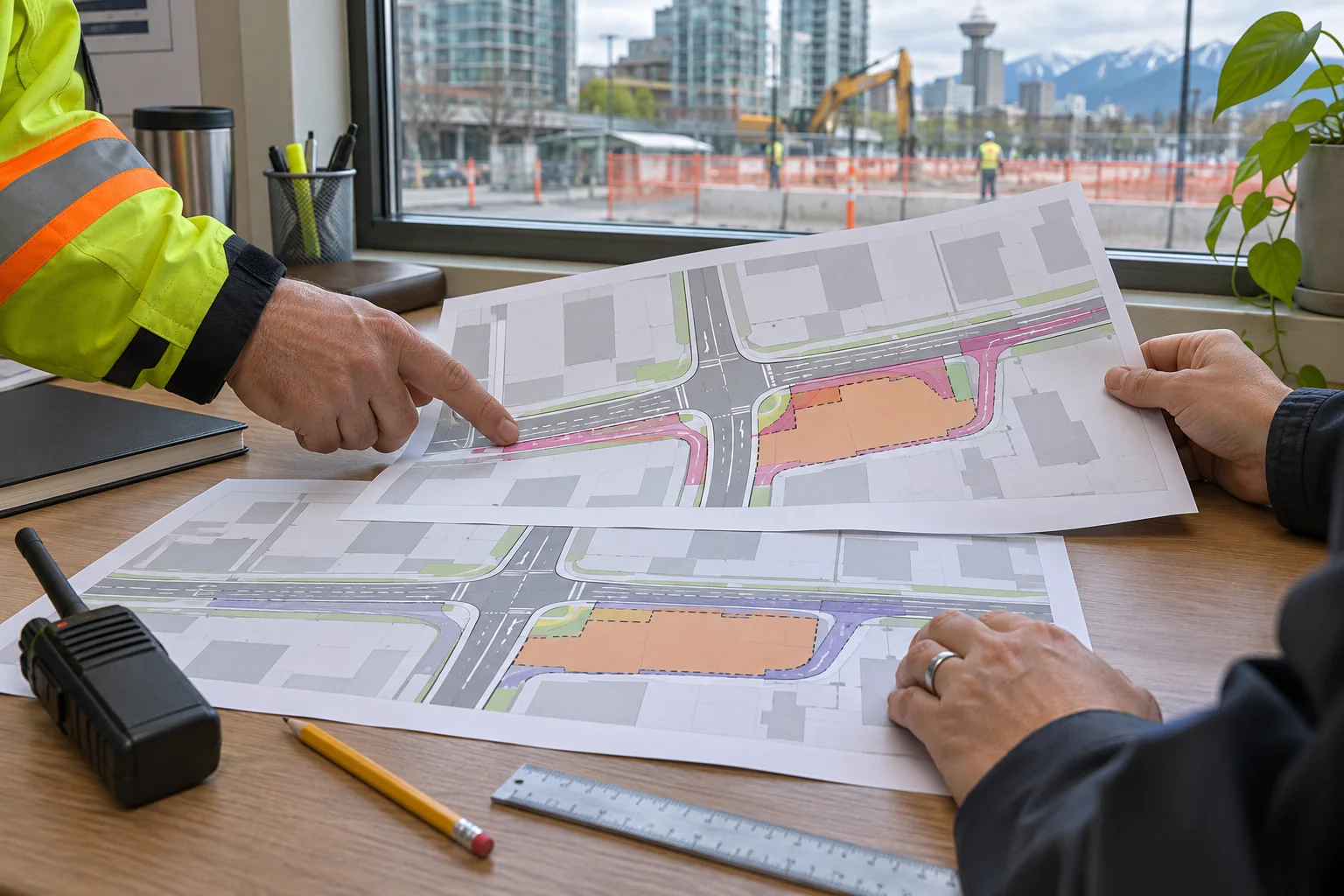
A traffic management plan should be reviewed when the work, road conditions or access needs no longer match the assumptions used to prepare it. Moving to a new construction phase, changing the work footprint or introducing a different delivery route can all raise questions that the original arrangement did not address.
The right response depends on the change. Some items may fit within an already documented phase. Others may require a revised risk assessment, amended traffic-control arrangements or further road-authority review. The aim is to identify that distinction before the field team is expected to work around an outdated drawing.
Look for changes that affect movement
A revised construction schedule does not automatically change every traffic arrangement, but it should prompt the project team to ask what has moved with it. Compare the actual work against the current plan, including how people and vehicles reach the site.
Useful review triggers include:
- A work area expanding into a different lane, sidewalk or cycle route.
- A new phase changing the position of the site entrance or equipment.
- Different delivery vehicles or a revised loading and unloading location.
- Work moving to different hours or a longer duration than expected.
- A change affecting transit, emergency routes, neighbouring properties or pedestrian access.
Record the change in plain language. A planner can assess "the delivery truck now needs the north gate" more usefully than "the site is different."
Distinguish the risk assessment from the drawing
A traffic management plan can contain several coordinated parts. The traffic control plan describes the arrangements used in the work zone, while the risk assessment addresses the hazards those arrangements need to manage. Updating a drawing without considering the reason for the change can leave a gap between the paperwork and the field activity.
WorkSafeBC Part 18 requires review and updating of the risk assessment when it is no longer valid or the scope or nature of work changes significantly. It also addresses amending and implementing the traffic control plan when that assessment is updated.
Ask the responsible qualified people what needs review for the particular change. The answer should identify both the documents and the field arrangements affected.
Check the approval path before using a revision
An internal project change does not by itself authorize a new use of public road space. Confirm whether the revised arrangement remains within the existing permit conditions and accepted plans.
The City of Vancouver's planning guidance notes that projects with several phases may require multiple traffic control plans as work progresses. That makes it useful to discuss later phases while the initial submission is being prepared.
Safeside can discuss traffic management planning and field requirements. The contractor should still confirm who is responsible for submissions, permits and communications with the authority. Do not assume a provider booking completes that approval process.
Keep one current version in the field
Give each revision a clear identifier and date. Explain which work stage it covers and when it becomes active. If the previous plan remains relevant to another phase, label that distinction so the team is not choosing between two apparently current drawings.
A revision handover should answer:
- What changed, and why?
- Which work stage and location does the revision cover?
- Has the necessary review or acceptance been completed?
- When will the field arrangement change?
- Who will brief the crew and check the implementation?
Make current information available to the people who need it. A revised attachment in one person's inbox is not a reliable way to communicate an active field change.
Test the handover with a practical example
Suppose a project starts with deliveries through an east gate, but the next phase closes that entrance. Before sending trucks to the west gate, the team should review the new vehicle movement, nearby road users and any effect on the permitted work area.
The change might also affect arrival instructions, staffing, access to neighbouring properties and the order in which work can happen. Those dependencies should be resolved together. A note on a delivery schedule is not a substitute for reviewing the traffic arrangements.
Traffic management plan revision FAQs
Does every minor schedule adjustment need a new plan?
Not necessarily. Ask the responsible planner or supervisor whether the adjustment changes the assumptions, risks, approved hours or arrangements covered by the current documents.
Who decides whether a revision needs authority review?
Confirm this with the responsible road authority and the project's planning team. Requirements depend on the location, permit and nature of the change.
Should an outdated version be deleted?
Follow the project's document-control process. Retain the necessary history while making it unmistakable which version the crew should use.
Discuss a changing project with Safeside
If your work sequence or access arrangements have changed, raise the issue before the next phase starts. Call 778-200-7154 or request a free quote from Safeside. Share the current plan, proposed change and Metro Vancouver location so the team can discuss planning and traffic-control requirements.