
Event Pick-Up and Drop-Off Zones: Traffic Planning for Vancouver Organizers
Plan event pick-up and drop-off zones in Vancouver with clearer vehicle access, accessible passenger routes and a coordinated arrival and departure brief.
Event Pick-Up and Drop-Off Zones: Traffic Planning for Vancouver Organizers
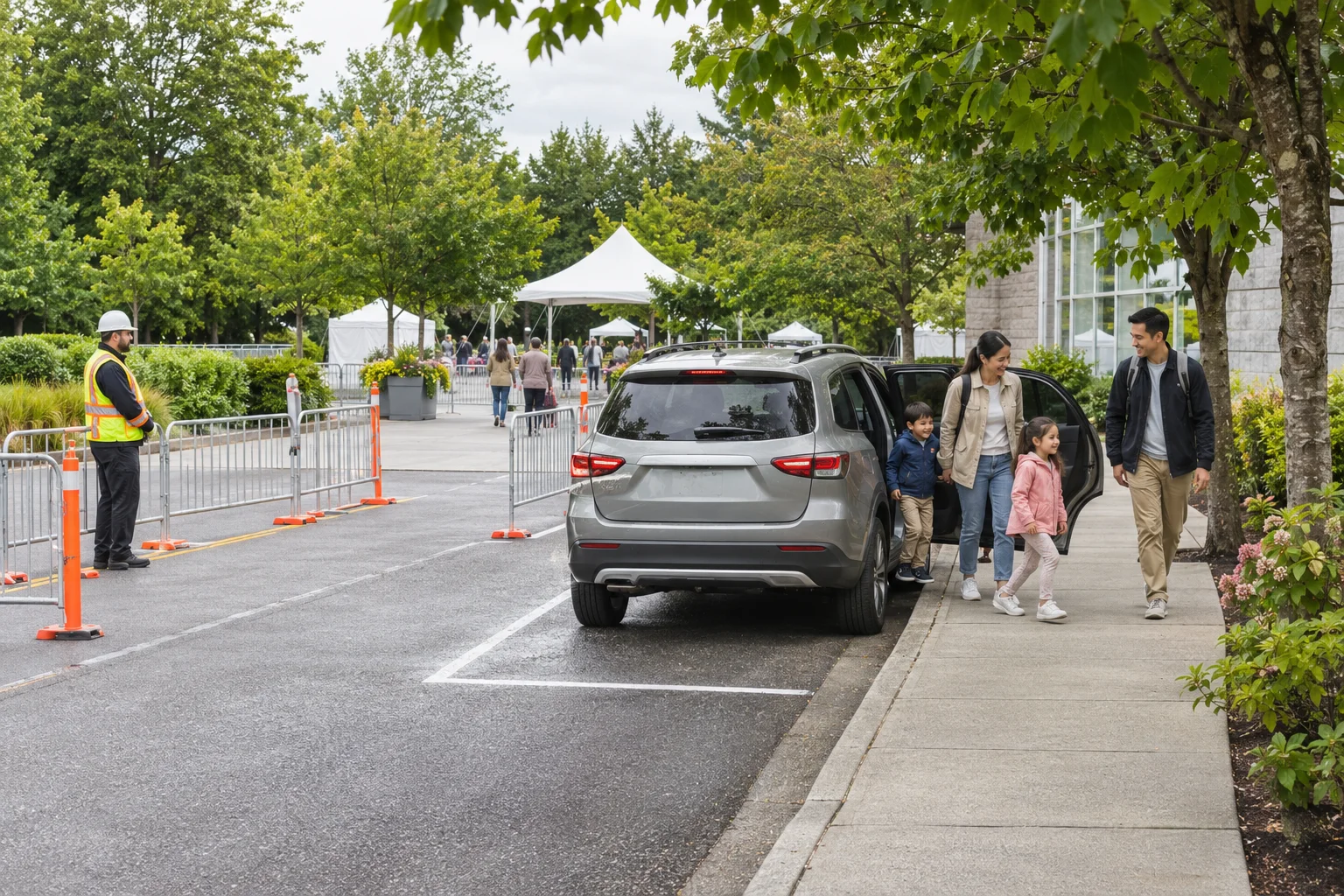
An event pick-up and drop-off zone needs more thought than an address in the invitation. Organizers need to decide where vehicles can stop, where passengers will go next and how the arrangement works when several people arrive together. The same location may behave very differently during a gradual arrival period and a concentrated departure rush.
For Vancouver events, begin with the venue's available space and the authority responsible for any affected street or curb. A proposed loading area on a map is not permission to use it. Once that distinction is clear, the organizer, venue and traffic-control provider can coordinate a workable brief.
Separate the different vehicle tasks
Passenger drop-off, rideshare collection, accessible transport, shuttle services and supplier unloading do not necessarily need the same space or operating time. Treating them as one queue makes it harder to explain who should go where.
List each vehicle type and what it needs to do. Consider whether passengers need extra time to board, whether a shuttle has a fixed route and when vendors are permitted to unload. The objective is to identify conflicting movements before event day, rather than ask staff to sort them out at the entrance.
Safeside's event traffic control service can be discussed alongside this operating brief.
Trace the passenger route after the vehicle stops
Walk through the proposed arrival from a passenger's perspective. Where does the door open? Is the onward route clear? Can someone using a mobility aid reach the correct entrance without entering a vehicle queue?
Discuss accessible transport needs with the venue and the people responsible for event accessibility. Confirm the available route, surface and entrance instead of assuming the closest curb is the most useful option.
For departures, identify where attendees can wait without blocking the walking route. Make the route to the collection point easy to explain in advance so people are not searching for vehicles in the road.
Confirm what the venue can actually authorize
A venue may control its private forecourt while the adjacent curb, sidewalk or cycle route belongs to the public street network. Ask who can approve the proposed use of each space and whether additional permissions are needed.
The City of Vancouver's traffic-management guidance covers events affecting streets and other transportation facilities. Use the relevant event and street-use process to confirm the location-specific requirements.
Do not advertise a public loading area as reserved until the necessary arrangements have been confirmed. Booking traffic-control personnel does not create a reservation or permit.
Plan for the departure peak
An arrival period spread over an hour may become a short burst of departures after the final performance. Review the expected finish time, likely collection demand and whether several activities end together.
Questions worth resolving include:
- Where should a driver go if the collection area is full?
- Is there an agreed place for shuttles to wait?
- How will staff direct someone to an accessible collection point?
- Who can change the attendee instructions if conditions change?
- How will emergency access remain available?
Avoid relying on an unapproved holding area on a nearby street. If the venue cannot accommodate the expected demand, raise that issue during planning.
Give attendees and drivers the same instructions
Use one confirmed location name or entrance description across tickets, event emails, the website and staff briefings. Different instructions can send passengers and drivers to opposite sides of the venue.
Explain any distinction between drop-off and pick-up. Include the walking route from the collection point and any relevant timing restrictions. Keep vendor instructions separate so delivery vehicles do not follow passenger guidance.
Assign a contact to resolve questions during the event. Staff should know who can approve a change and who needs to be told before new instructions are issued.
Prepare the event-day handover
Before opening, review the confirmed vehicle routes, passenger paths, communication method and outstanding issues with the responsible team. Identify who manages venue access and who coordinates traffic-control personnel.
An early discussion is especially useful if the venue is hosting another activity on the same day. Shared entrances, loading areas or nearby construction can affect a plan that otherwise looks straightforward.
Event loading-zone FAQs
Can we use the curb outside our venue?
Confirm ownership, restrictions and permissions first. Venue hire alone does not establish a right to reserve public curb space.
Is rideshare pick-up the same as passenger drop-off?
Not always. Waiting times, passenger searches and a concentrated departure period can create different operating needs.
How far ahead should we contact Safeside?
Start the discussion early. Safeside recommends allowing two to four weeks for event planning and quoting, while permit or venue deadlines may require more time.
Plan event access with Safeside
Share your Vancouver venue, expected attendance, arrival and finish times, and proposed passenger collection arrangements. Call 778-200-7154 or contact Safeside for a free quote to discuss the traffic-control scope for your event.