
Night Lane Closures in Metro Vancouver: Planning Visibility and Shift Handovers
Plan night lane closures in Metro Vancouver with a brief covering visibility, access, work windows and a clear handover between traffic-control crews.
Night Lane Closures in Metro Vancouver: Planning Visibility and Shift Handovers
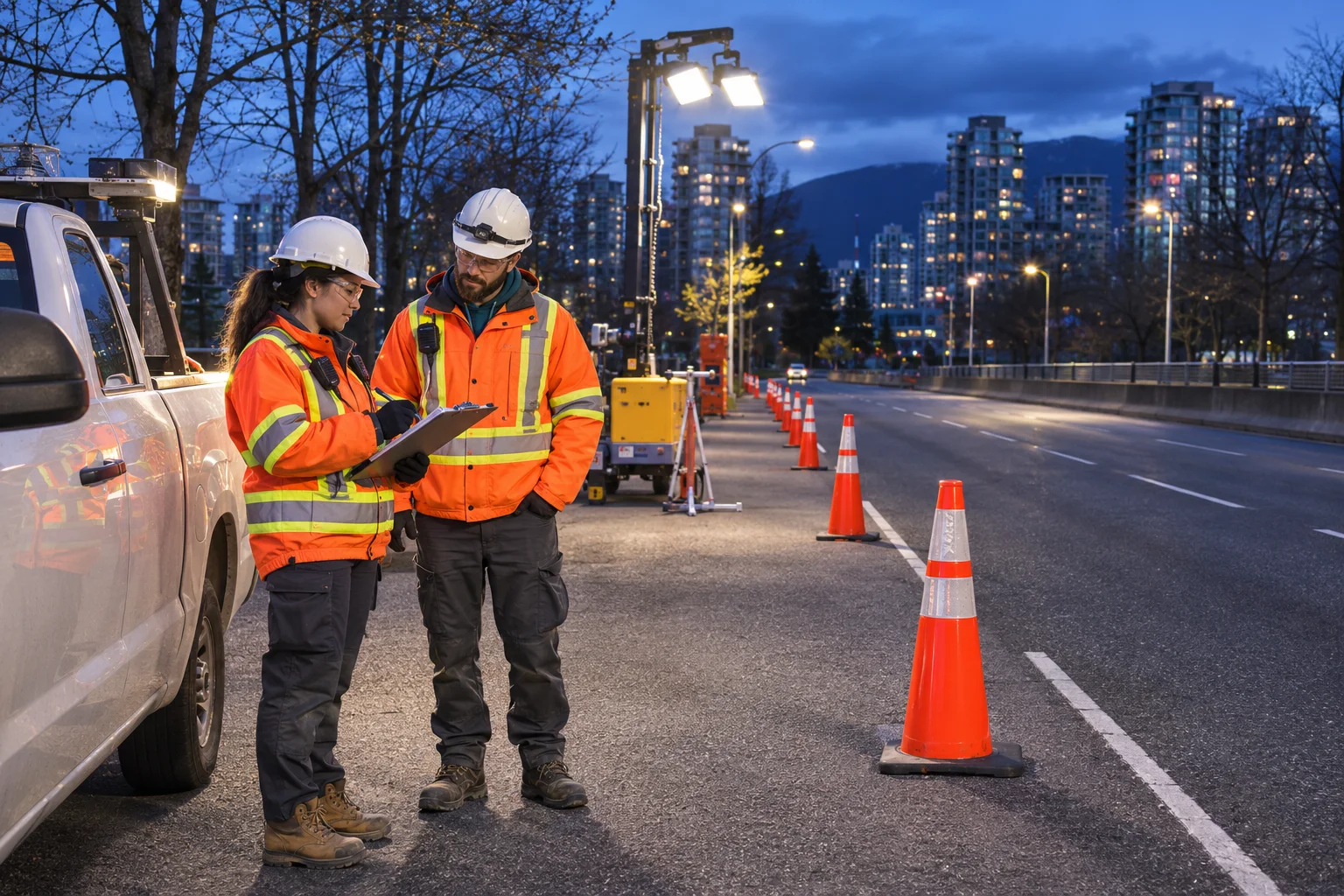
Night lane closures need a brief that explains how the site will work after daylight disappears and what the incoming crew needs to know. A quieter road does not remove the need to plan for drivers, pedestrians, cyclists, transit and emergency access. Darkness can make an unfamiliar route harder to read, especially when rain or competing lights affect what people can see.
For contractors in Metro Vancouver, the useful question is not simply whether a night crew is available. It is whether the work sequence, approved closure window, visibility arrangements and shift responsibilities have been coordinated. Safeside's lane closure services can be discussed while those details are still being organized.
Build a brief around the actual night shift
Start with the exact work location, proposed hours and the activities expected in each part of the shift. Identify when equipment arrives, when the main work starts and when the road needs to return to its agreed operating condition. Include setup and removal in the discussion rather than treating the entire permitted window as productive work time.
A useful brief gives the traffic-control team:
- The current plan and permit conditions, including the authorized work window.
- Site and after-hours contact details, with a named decision-maker.
- Expected deliveries, equipment movements and changes in the work footprint.
- Access needs for nearby properties, emergency vehicles, transit, pedestrians and cyclists.
- The proposed handover time and any work that may continue into the next shift.
Booking a crew does not obtain a road-use permit. Confirm who is responsible for approvals and whether the proposed hours are permitted at that location.
Review visibility from the road user's approach
Arrange a site review that considers how people approach the work zone after dark, not only how clearly workers can see their immediate task. Ask about street lighting, competing business signs, parked vehicles, vegetation and reflections from wet pavement. A daytime photograph may not show those conditions.
WorkSafeBC's traffic-control regulation addresses illumination where traffic-control persons direct traffic in darkness or poor visibility, including avoiding excessive glare from temporary lighting. The appropriate arrangement should be determined for the site, rather than assumed from the presence of a light tower.
This is a planning discussion for the qualified team. Do not use a blog checklist as a drawing for positioning lights, devices or personnel.
Carry access decisions into the evening
A business may close before the shift begins while residents, cleaning staff or delivery drivers still need access. Record the access arrangements that have actually been agreed and identify anything still unresolved.
Check whether pedestrian routes remain understandable when the usual entrance is closed. Discuss how an unexpected visitor will find the correct route without stepping into the work area. If a delivery cannot enter as planned, the driver should have a contact and an agreed next step rather than choosing a new stopping place.
Make the shift handover specific
The outgoing and incoming contacts should review what is happening now, what changes next and which issues need follow-up. Passing over a drawing without discussing the current site leaves room for assumptions.
Include the active plan version, work completed, remaining equipment movements, changes to access and any concerns observed during the shift. Identify who owns each unresolved issue. If an arrangement needs review, explain its status clearly instead of letting it become the next crew's default.
For example, a delivery delayed beyond the first shift may affect the incoming crew's scope. Confirm the revised arrival and access arrangements before treating the original schedule as still current.
Agree on the end-of-shift decision
Discuss the expected condition of the site when work stops. Who confirms that the closure can be removed? What happens if the work runs late or the planned reopening condition has not been reached? Those decisions should have an owner and an escalation contact.
Keep a short record of what was handed back and what remains in place for the following shift. It gives the contractor and traffic-control provider a common starting point for the next work period.
Night lane closure FAQs
Can a daytime plan be used unchanged at night?
Do not assume it can. Ask the responsible planner and supervisor to review the proposed night conditions, work activity and applicable approval requirements.
Does less traffic mean a smaller crew?
Crew needs depend on the site, approved scope and risk assessment. Lower traffic volumes alone do not establish the required staffing.
What should I send when requesting a quote?
Send the location, current plan, proposed night hours, work sequence, access needs and site contact. Note any pending approvals or uncertain delivery times.
Plan your night lane closure with Safeside
Discuss the night shift before confirming equipment deliveries and crew handovers. Call 778-200-7154 or contact Safeside for a free quote. Share your Metro Vancouver location, proposed work window and access requirements so the team can review the traffic-control scope.