
What Is a Traffic Control Person?
A Traffic Control Person directs road users through or around a work zone under a site-specific plan. Learn the role, limits, training, and field responsibilities.
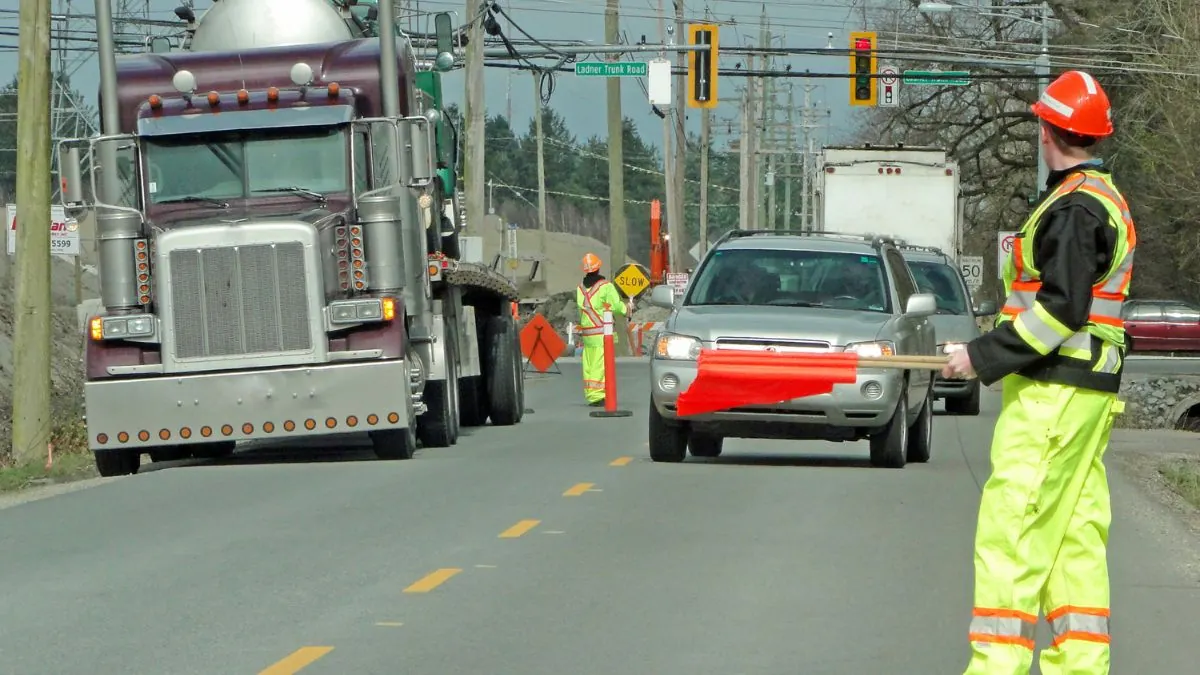
A Traffic Control Person (TCP) is a trained worker assigned by an employer to direct traffic at a work zone. The TCP carries out the site-specific traffic-control plan; they do not replace the risk assessment, design the plan from the roadway, or improvise an unapproved closure.
What a TCP does
Depending on the approved plan, a TCP may:
- Direct traffic with the prescribed paddle and signals.
- Coordinate alternating traffic with another TCP.
- Help protect workers while vehicles move through or around the work zone.
- Watch for changing traffic, visibility, weather, and work activity.
- Communicate with the traffic-control supervisor and other assigned stations.
- Keep the assigned position and escape route clear.
WorkSafeBC Part 18 defines the role and the conditions under which TCPs work. It also requires the employer to complete a risk assessment, prepare the plan, designate a qualified supervisor, verify approved training, and provide site-specific orientation.
What a TCP is not
A TCP is not automatically the traffic-control supervisor, plan designer, permit holder, or lane-closure technician. On some crews one person may hold multiple qualifications or assigned responsibilities, but the project should identify those roles clearly.
A TCP should not move to an unassessed position, alter the approved flow, or continue when a serious uncontrolled hazard develops without escalating to the supervisor. Field experience matters, but it does not authorize work outside the plan and permit conditions.
Training and employment
TCPs must complete a WorkSafeBC-approved program. For the certification pathway, use the dedicated guide to Traffic Control Person training in BC and verify current providers with WorkSafeBC.
If you are looking for work, visit Applying as a TCP. If you need crew support for a project, use Safeside's traffic-control service page instead. Keeping those intents separate helps applicants and project owners reach the right next step.